
Best Neuro Hospital in Varanasi: Neurology, Neurosurgery and Stroke Care
Specialist-led neurology, neurosurgery and 24x7 stroke emergency support at Agrim Hospital near Lanka Road and Durgakund in Varanasi.
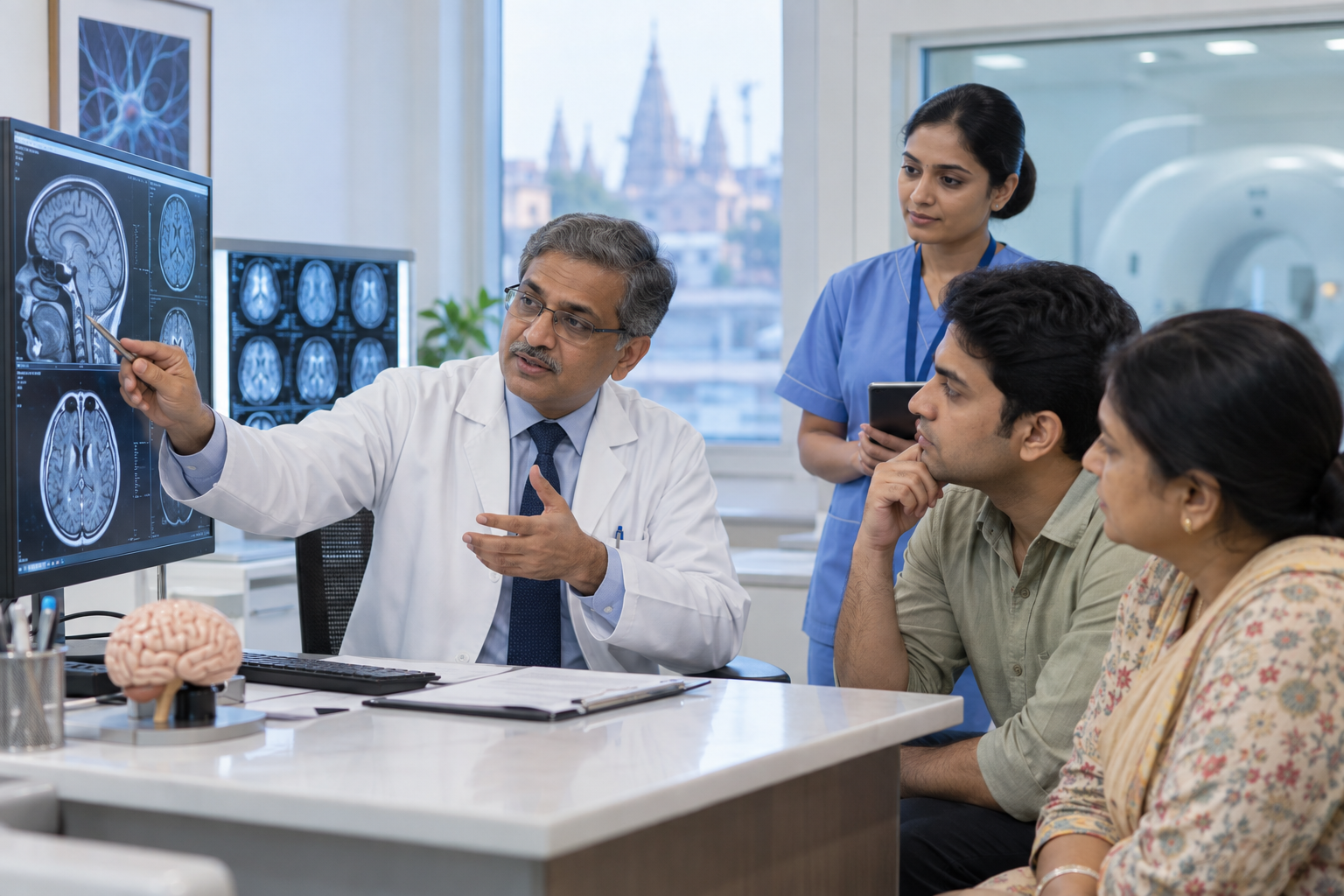
Problems affecting the brain, spine and nervous system can appear as sudden emergencies or develop gradually over time. Choosing a neuro hospital with access to neurology, neurosurgery, diagnostics, emergency assessment and critical-care coordination can help patients receive the right evaluation without unnecessary delay.
Agrim Hospital in Varanasi provides specialist-led neurological care and round-the-clock support for stroke and other neurological emergencies. The hospital is located near Lanka Road, Ravindrapuri Extension, Durgakund, Anandbagh and Bhelupur.
Possible stroke is an emergency. Call 63 9090 9900 immediately if a person suddenly develops facial drooping, weakness in one arm, difficulty speaking, loss of balance, severe headache or altered consciousness.
When should you visit a neuro hospital?
A neurological evaluation may be needed when symptoms involve the brain, spinal cord, nerves or muscles. Seek medical advice for symptoms such as:
- recurring or unusually severe headache;
- dizziness, imbalance or unexplained falls;
- weakness, numbness or tingling in the face or limbs;
- seizures, fainting or episodes of altered awareness;
- memory, behaviour, speech or movement changes;
- persistent neck or back pain with limb weakness or numbness;
- tremors, stiffness or slowing of movement; or
- symptoms that continue, worsen or interfere with daily activities.
Sudden symptoms need urgent assessment. Do not wait for a routine appointment when stroke, serious head injury, seizure with prolonged unconsciousness or rapidly worsening weakness is suspected.
Recognise stroke warning signs: act FAST
Stroke treatment is time-sensitive. Remember FAST:
- F – Face: Ask the person to smile. Is one side drooping?
- A – Arms: Ask the person to raise both arms. Does one arm drift downward?
- S – Speech: Is speech slurred, confused or difficult?
- T – Time: Call emergency help immediately and note when symptoms started.
Other possible warning signs include sudden vision loss, severe unexplained headache, loss of coordination, dizziness or numbness on one side. Even if symptoms improve after a few minutes, urgent medical assessment is still important because a transient ischaemic attack can be a warning sign.
Neurology care
A neurologist evaluates and manages conditions of the brain, spinal cord, peripheral nerves and muscles. The consultation may include a detailed symptom history, neurological examination and review of previous scans or laboratory reports.
Depending on the patient's condition, neurological care may involve assessment and treatment planning for stroke, seizures, migraine and headache disorders, movement disorders, neuropathy, memory concerns, neuromuscular problems and other neurological symptoms.
Not every patient requires the same tests. Investigations are selected by the treating doctor according to the clinical examination and medical history.
Neurosurgery and spine care
A neurosurgeon assesses conditions that may need surgical or procedural management involving the brain, spine or nerves. Referral to neurosurgery does not automatically mean that an operation will be required. The specialist first reviews symptoms, neurological findings, imaging and the patient's overall health.
Patients may be referred for neurosurgical opinion in cases involving brain or spine injury, pressure on nerves, certain tumours, bleeding in or around the brain, hydrocephalus, spinal instability or persistent symptoms that have not responded to appropriate non-surgical treatment.
The recommended plan depends on the diagnosis, urgency, expected benefit and individual risks. Patients should discuss treatment alternatives and recovery expectations with the treating team.
Coordinated stroke and emergency care
Neurological emergencies often require several teams to work together. Emergency physicians, neurologists, neurosurgeons, radiology and diagnostics teams, critical-care specialists, nurses and rehabilitation professionals may all contribute at different stages.
On arrival, the priority is rapid clinical assessment and stabilisation. Doctors determine the required investigations and treatment according to the type of emergency, time of symptom onset, imaging findings, medical history and safety considerations.
Preparing for a neurology appointment
To help the doctor understand the condition, bring:
- previous prescriptions and consultation notes;
- brain or spine scans with reports and, if available, image films or digital copies;
- recent laboratory reports;
- a current medicine and allergy list;
- a short timeline describing when symptoms began and how they changed; and
- details from a family member who witnessed seizures, fainting or behaviour changes.
Write down the patient's main questions before the visit. For episodic symptoms, a safe video recorded by a family member may sometimes help the doctor understand what happened, but recording should never delay emergency care.
Neuro hospital location in Varanasi
Agrim Hospital is located at Plot 21, Lanka Road, Ravindrapuri Extension, Durgakund, Anandbagh, Bhelupur, Varanasi, Uttar Pradesh 221005. The map below can help patients and attendants plan their route.
Book a neurology or neurosurgery consultation
Use the Book Appointment option on this website or call 63 9090 9911 for hospital assistance. Share the patient's main symptoms and whether the appointment is for neurology, neurosurgery or follow-up care.
For stroke signs or another neurological emergency, call 63 9090 9900 and seek immediate help.
This article provides general health information and does not replace examination, diagnosis or treatment by a qualified medical professional. Treatment decisions depend on individual clinical assessment.
Visit Agrim Hospital
Frequently asked questions
Which symptoms require urgent neurological care?
Sudden facial drooping, one-sided weakness, speech difficulty, seizures, loss of consciousness, severe unexplained headache or serious head injury require urgent medical assessment.
What is the difference between a neurologist and a neurosurgeon?
A neurologist diagnoses and medically manages conditions of the brain, spine, nerves and muscles. A neurosurgeon evaluates conditions that may need surgical or procedural treatment involving the brain, spine or nerves.
Does seeing a neurosurgeon mean surgery is necessary?
No. A neurosurgeon first reviews the diagnosis, examination and imaging. Treatment may be surgical or non-surgical depending on the individual case.
What should I bring to a neurology appointment?
Bring previous prescriptions, scan reports and images, laboratory reports, a medicine and allergy list, and a timeline of the symptoms.
How can I book a neuro consultation at Agrim Hospital?
Use the Book Appointment option on the website or call 63 9090 9911. For a neurological emergency, call 63 9090 9900.
Get expert care without delay
For symptoms, consultations or emergency support, our care team is ready to guide you.